Le Carnee erano feste in onore di Apollo, celebrate a Sparta.
In origine erano dedicate a Carneo, un antico dio dei Dori che poi venne identificato con Apollo.
Le celebrazioni duravano nove giorni verso la fine dell'estate, durante il mese chiamato Carneio.
The Carnee festivities were in honor of Apollo, celebrated in Sparta.
Originally they were dedicated to Carneo, an ancient god of the Dorians who was then identified with Apollo.
The celebrations lasted nine days towards the end of the summer, during the month called Carneio.
La cerimonia più importante era una corsa nella qule alcuni giovani, tenendo in mano rami di vite, rincorrevano un uomo adorno di ghirlande: se riuscivano a prenderlo, la città avrebbe goduto di un anno fortunato, altrimenti no.
The most important ceremony was a race in which some young men, holding branches of vines, chased a man adorned with garlands: if they could get him, the city would have enjoyed a lucky year, otherwise not.
Durante le feste si svolgevano anche gare di musica e di danza, come raffigurato in questo piatto, copia della scena dipinta su un cratere conservato al museo archeologico di Taranto che, essendo una colonia di Sparta, ne condivideva le usanze.
During the festivities there were also music and dance competitions, as shown in this plate, a copy of the scene painted on a crater preserved in the archaeological museum of Taranto, which, being a colony of Sparta, shared its customs.
Durante le Carnee le attività belliche erano sospese e fu per questo che, nella prima guerra persiana, gli Spartani arrivarono in ritardo alla battaglia di Maratona e poi parteciparono alla seconda guerra persiana con soli 300 uomini, quelli che, comandati dal re Leonida, combatterono alle Termopili.
During Carnee the war activities were suspended and it was for this reason that, in the first Persian war, the Spartans arrived late to the Battle of Marathon and then participated in the second Persian war with only 300 warriors, those who, led by King Leonidas, fought at Thermopylae
sabato 27 ottobre 2018
giovedì 27 settembre 2018
Giove
Il 17 Agosto ho scattato questa foto del cielo notturno: la Luna crescente e più in basso, il pianeta Giove, molto luminoso.
On August 17th I took this photo of the night sky: the crescent moon and lower, the planet Jupiter, very bright.
Ti piace questo piatto decorativo?
puoi trovarlo nel mio shop, cliccando QUI
Do you like this ornamental plate?
you can find it in my shop, clicking
HERE

E questa è l'anfora antica, conservata a Parigi, al Louvre
Ti piace? bene, puoi solo guardarla, non averla ....
And this is the ancient amphora, preserved in Paris, at the Louvre.
Do you like it? well, you can look but you
can't have .....
On August 17th I took this photo of the night sky: the crescent moon and lower, the planet Jupiter, very bright.
Come ben sappiamo, non è luce sua: è tutta luce solare riflessa dalla sua superficie.
Però si dice che Giove sia una "stella mancata", poiché, se la sua massa fosse stata un poco più grande, superando un certo valore critico, si sarebbe potuto innescare il processo di fusione nucleare che produce energia e luce nelle stelle.
As is well known, it is not its light is all reflected sunlight from its surface.
However, it is said that Jupiter is a "missed star", because, if its mass were a little larger, exceeding a certain critical value, it could have triggered the process of nuclear fusion that produces energy and light in the stars.
Comunque è il più grande pianeta del sistema solare.
La sua massa è due volte e mezza quella di tutti gli altri pianeti insieme!
La sua massa è gassosa e nella sua atmosfera vortica un uragano che appare come una "grande macchia rossa"
However it is the largest planet in the solar system.
Its mass is two and a half times that of all the other planets together!
Its mass is gaseous and in its atmosphere swirls a hurricane looking like a "big red spot"
A ragione quindi fu chiamato Giove, lo stesso nome con cui gli antichi Romani chiamarono il potente re degli dei, signore del Cielo e dei fenomeni atmosferici, lo stesso dio che i Greci chiamavano Zeus
He was therefore rightly called Jupiter, the same name by which the ancient Romans called the mighty king of the gods, lord of heaven and atmospheric phenomena, the same god that the Greeks called Zeus.
Io ho voluto rendergli omaggio dipingendo su un piatto l' immagine che ho trovato su un'anfora attica del 470 a.C.
Vi compare in tutta la potenza mentre scaglia la folgore con la mano destra e, con la mano sinistra, tiene l'aquila, che gli è sacra.
I wanted to pay tribute to him by painting on a plate the image I found on an Attic amphora of 470 BC.
He appears in all his power as he throws the thunderbolt with his right hand and, with his left hand, holds the eagle, which is sacred to him.
I wanted to pay tribute to him by painting on a plate the image I found on an Attic amphora of 470 BC.
He appears in all his power as he throws the thunderbolt with his right hand and, with his left hand, holds the eagle, which is sacred to him.
Ti piace questo piatto decorativo?
puoi trovarlo nel mio shop, cliccando QUI
Do you like this ornamental plate?
you can find it in my shop, clicking
HERE

E questa è l'anfora antica, conservata a Parigi, al Louvre
Ti piace? bene, puoi solo guardarla, non averla ....
And this is the ancient amphora, preserved in Paris, at the Louvre.
Do you like it? well, you can look but you
can't have .....
domenica 5 agosto 2018
LA NASCITA DI AFRODITE - THE BIRTH OF AFRODITE
Afrodite non era figlia di Zeus e nemmeno sua sorella.
Who was Uranus?
The Olympic myth of creation tells us that Uranus, the starry sky, was generated by Gaea, the Mother Earth, just emerged from Chaos, at the beginning of time.
With Uranus, Gea generated the hundred armed Giants and then the Cyclops and the Titans, the youngest of whom was Cronus.
Uranus did not like the children that Gaea had given birth and, when he punished the Cyclops rebels by making them fall into Tartarus, Mother Gea sought revenge with the help of the young Cronus.
He, armed with a scythe, waited for Uranus to enter his mother's bed, attacked him from behind, castrated him and threw his genitals into the sea.
Il mito della sua nascita ispirò poeti come Foscolo quando cantò
" .... le onde
del greco mar, da cui vergine nacque
Venere, e fea quelle isole feconde
col suo primo sorriso ......"
The myth of her birth inspired poets like Foscolo when he sang
".... the waves
of the Greek Sea, from which a virgin was born
Venus, and she made those islands fruitful
with her first smile ..."
Ispirò molti pittori
and inspired many painters too
Se proprio vogliamo stabilire un vincolo di parentela, poteva essere sua zia, in quanto figlia di Urano, poichè era figlio di Urano anche Crono, il padre di Zeus.
Aphrodite was not a daughter of Zeus and not even his sister.
If we really want to establish a bond of kinship, she could be his aunt, being daughter of Uranus, because also Cronus, the father of Zeus, was son of Uranus.
Aphrodite was not a daughter of Zeus and not even his sister.
If we really want to establish a bond of kinship, she could be his aunt, being daughter of Uranus, because also Cronus, the father of Zeus, was son of Uranus.
Chi era Urano?
Il mito olimpico della creazione racconta che Urano, il cielo stellato, fu generato da Gea, la Madre Terra, appena emersa dal Caos, all'inizio del tempo.
Con Urano, Gea aveva generato i Giganti dalle cento braccia e poi i Ciclopi e i Titani, il più giovane dei quali era Crono.
Urano non amava i figli che Gea partoriva e, quando punì i Ciclopi ribelli precipitandoli nel Tartaro, la Madre Gea cercò vendetta con l'aiuto del giovane Crono.
Egli, armato di una falce, aspettò che Urano entrasse nel letto della madre, lo assalì alle spalle, lo evirò e gettò i genitali nel mare.
![]() |
| mutilazione di Urano ( Vasari ) |
The Olympic myth of creation tells us that Uranus, the starry sky, was generated by Gaea, the Mother Earth, just emerged from Chaos, at the beginning of time.
With Uranus, Gea generated the hundred armed Giants and then the Cyclops and the Titans, the youngest of whom was Cronus.
Uranus did not like the children that Gaea had given birth and, when he punished the Cyclops rebels by making them fall into Tartarus, Mother Gea sought revenge with the help of the young Cronus.
He, armed with a scythe, waited for Uranus to enter his mother's bed, attacked him from behind, castrated him and threw his genitals into the sea.
Il sangue di Urano cadde sulla Madre Terra ed essa generò i Giganti, le Erinni e le Ninfe del frassino.
I Titani conferirono a Crono la sovranità che era stata di Urano.
Crono sposò sua sorella, la Titanessa Rea, dalla quale avrebbe poi avuto tre figlie, Estia, Demetra ed Era, e tre figli, Ade, Poseidone e Zeus.
The blood of Uranus fell on Mother Earth and she generated the Giants, the Erinni and the Nymphs of the ash tree.
The Titans conferred to Cronus the sovereignty that Uranus had before.
Cronus married his sister, the Titaness Rea, from whom he would then have three daughters, Estia, Demeter and Hera, and three sons, Ade, Poseidon and Zeus.
E i genitali caduti in mare?
Fecondarono la spuma del mare e da essa nacque Afrodite che, trasportata da una conchiglia, navigò fino a Pafo, nell'isola di Cipro, che sarebbe diventata la sede principale del suo culto.
Qui fu accolta da Eros che si mise al suo servizio.
( Il mito della sua nascita si legge nel suo nome: infatti, Afrodite deriva dalla parola greca "aphròs = spuma del mare" )
And the genitals fallen into the sea?
They fertilized the sea foam and from it Aphrodite was born. She, transported by a shell, sailed to Paphos, on the island of Cyprus, which would become the main seat of her cult.
Here she was welcomed by Eros who put himself at her service.
( The myth of hes birth can be read in her name: in fact, Aphrodite derives from the Greek word "aphròs = sea foam" )
Afrodite quindi precede Zeus. È la grande dea dell'amore venerata dai tempi più antichi anche in Oriente, con il nome di Astarte, e poi a Roma con il nome di Venere.
Il suo potere viene da lontano dalla preistorica Grande Dea Madre dispensatrice di vita.
Nel mondo greco è dea olimpica con un campo d'azione molto vasto e potente, poiché nessuno degli altri dei, Zeus compreso, può restare insensibile alle sue lusinghe.
Aphrodite then precedes Zeus. Sheis the great goddess of love venerated since ancient times also in the East, with the name of Astarte, and then in Rome with the name of Venus.
Her power comes from far away from the prehistoric Great Mother Goddess dispenser of life.
In the Greek world she is an Olympic goddess with a vast and powerful field of action, since none of the other gods, including Zeus, can remain insensitive to her flattery.
Perciò, ho pensato di realizzare un paio di originali orecchini ispirati dal vaso illustrato sopra.
E, chissà che non abbiano acquisito un po' del potere di Afrodite e non lo trasmettano a chi li porta
Therefore, I thought of making a pair of original earrings inspired by the vase illustrated above.
And, who knows that they have not acquired a bit of the power of Aphrodite and do not transmit it to their bearer
Therefore, I thought of making a pair of original earrings inspired by the vase illustrated above.
And, who knows that they have not acquired a bit of the power of Aphrodite and do not transmit it to their bearer
![]() |
| disponibili presso MITOliberty |
" .... le onde
del greco mar, da cui vergine nacque
Venere, e fea quelle isole feconde
col suo primo sorriso ......"
The myth of her birth inspired poets like Foscolo when he sang
".... the waves
of the Greek Sea, from which a virgin was born
Venus, and she made those islands fruitful
with her first smile ..."
Ispirò molti pittori
and inspired many painters too
![]() |
| affresco ponpeiano |
![]() |
| Sandro Botticelli |
![]() |
| Francesco Vasari |
![]() |
| Francois Boucher |
martedì 3 aprile 2018
RODODACTILOS EOS
![]() |
| vaso trovato in Sud Italia e conservato a Monaco ( 430 a.C. ) vase found in South Italy and served in Munich ( 430 B.C. ) |
Perciò Omero la chiama "rododactilos Eos", cioè "Aurora dalle rosee dita"
Sister of Sun and Moon, mother of the winds, Dawn comes driving her horses and announces the arrive of the Sun, painting pink the eastern sky.
This is the reason Homer calls "rododactilos Eos", meaning "pink fingered Aurora"
Tra i suoi amanti ci fu Ares e ciò indispettì Afrodite che si adoperò affinchè si innamorasse non più di dei ma di uomini mortali.
E così si innamorò del bellissimo principe troiano Titono, lo rapì e lo portò in Etiopia. Da lui ebbe il figlio Memnone che combattè nella guerra di Troia dove, malgrado la premurosa assistenza di Eos che, come altre divine madri, proteggeva il figlio nei duelli, venne ucciso da Achille.
Ares was one of her lovers and Aphrodites was so disappointed that decided Eos woul fall in love no more with gods but with humans.
So she fell in love with the very beautiful troian prince Titono, kidnapped and led him to Ethiopia.
With Titono, Eos had her son Memnon who fought in the Troy war where, even if supported by his mother , he was killed by Achilles, supported by his mother Thetis.
Il dolore di Eos fu grande, inconsolabile: ogni mattina piange il figlio con lacrime di rugiada.
The pain of Eos was great, inconsolable: every morning she weeps her son with tears of dew.
![]() |
| Eos con Memnone morto, Kylix dipinta da Douris e conservata al Louvre (490-480 a.C.) Eos with dead Memnon, kylix painted by Douris and conserved in Louvre (490-480 B.C.) |
E Titono?
Eos chiese per lui l'immortalità e Zeus gliela concesse.
Ma si dimenticò di chiedere anche l'eterna giovinezza. Perciò Titono continuò ad invecchiare, divenne sempre più decrepito, finchè si trasformò in cicala.
And Titono?
Eos asked for immortality and Zeus granted it to him.
But she forgot to ask for eternal youth. So Titono continued to age, became increasingly decrepit, until he turned into a cicada.
..................
But let's remember him young and handsome, when kidnapped by Eos in love.
![]() |
| ho dipinto questo piatto, riproducendo l'mmagine di una antica kylix conservata a Boston I painted this plate with the image of an ancient kylix that is in Boston museum |
sabato 3 febbraio 2018
AFRODITE cavalca un'oca AFRODITE riding a GOOSE
Poi ho letto la didascalia in lingua inglese e ho letto "goose", non cigno ma oca.
E, in effetti, il collo del volatie non è così lungo e sinuoso come quello dei cigni.
Peccato! il cigno, con la sua eleganza, mi sembrava più adatto ad accompagnare la dea della bellezza e dell'amore.
When I saw this beautiful image of Aphrodite, I thought she was riding a swan. Then I red the description and I discovered she was ridig a goose.
And, to see well, the neck of the bird is not so long and flexsuous as the swans have.
What a pity! with his elegance the swan seemed better to go with the goddess of beauty and love.
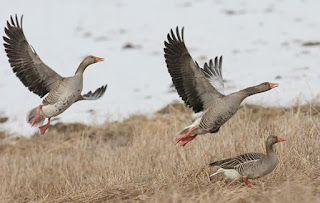
Ma se le oche da cortile sono un po' goffe, le oche selvatiche in volo sono stupende e compiono migrazioni grandiose.
But, if backyard geese are a little ungainly, wild geese in flight are beautiful and make great migrations.
Sono quindi animali dotati di grande potenza nella lotta per la vita.
E nella preistoria anche l'oca, come altri uccelli acquatici, era una manifestazione della Grande Dea Madre dispensatrice di vita e di nutrimento di cui l'acqua era ed è condizione necessaria.
They are animals with great power in the struggle for life.
And in prehistorical times the goose, like other water birds, was a manifestation of the Great Mother Goddess, dispenser of life and nourishment of which water was and is a necessary condition.
![]() |
| statuetta della dea con testa di oca e simboli di acqua (5000 a.C.) statuette of the goddess with goose head and water symbols (5000 B.C.) |
E Afrodite?
Anche lei discende dalla Grande Dea Madre. E' la dea dell'amore, dispensatore di vita.
And Aphrodite?
She comes from the Great Mother Goddess too. She is the goddess of love, dispenser of love
martedì 24 ottobre 2017
MEDUSA 1
Questo è il frontone occidentale del tempio di Artemide a Corfù. La figura centrale è la Gorgone Medusa: bocca aperta, lingua pendula, ali di ape, due serpenti come antenne fuoriuscenti dalla testa, serpenti attorno alla cintura.
E' posta tra due pantere, presentata quindi come Potnia Theron, Signora delle fiere, proprio come Omero chiamò Artemide a cui il tempio è dedicato.
This is the western pediment of the Temple of Artemis in Corfu. The central figure is the Gorgon Medusa: open mouth, pendulum language, bee wings, two snakes as antennas leaking from the head, snakes around the belt.
She is placed between two panthers, so presented as Potnia Theron, Lady of Fairs, just as Homer called Artemis to whom the temple is dedicated.


Medusa, in the Greek myth, was one of the three Gorgons, three monstrous sisters, with hair snakes, who had the power to petrify anyone looking at them. Of the three, only Medusa was mortal and was killed by Perseus who cut and gave his head to the goddess Athena, who had helped him and who kept the head on her aegid.

Secondo i racconti della mitologia greca, Medusa sarebbe stata trasformata in un mostro da Atena o perché gelosa della bellezza di cui la giovane Medusa si vantava, dicendo di poter competere con la dea stessa, o perché la riteneva colpevole di profonazione, in quanto violentata da Poseidone dentro un suo tempio....
Comunque sia, ebbe una tragica fine e la sua testa divenne ornamento per la vendicativa Atena.
According to the stories of Greek mythology, Medusa would have been transformed into a monster by Athena or because she was jealous of the beauty of which the young Medusa boasted, saying she could compete with the goddess, or because she was guilty of profaning as she was raped by Poseidon in the temple of Athena.
However, she had a tragic end and her head became an ornament for the avenging Athena.
Fine prima parte
Come deterrente per i nemici, il suo volto veniva anche raffigurato sugli scudi dei combattenti.
D'altronde, il suo nome significa "protettrice", dal verbo "medo = proteggo"
As a deterrent to the enemies, his face was also depicted on the shields of the fighters.
Moreover, her name means "protectress", from the verb "medo = protect"
As a deterrent to the enemies, his face was also depicted on the shields of the fighters.
Moreover, her name means "protectress", from the verb "medo = protect"
giovedì 19 ottobre 2017
MEDUSA 2
![]() |
| frontone occidentale del tempio di Atrtemide a Rodi western pediment in Artemis temple in Rhodes |
Sul frontone dell'Artemision di Rodi, Medusa compare mostruosa ma non trasmette cattiveria, bensì potenza, soprattutto per quei serpenti attorcigliati, che nei tempi più antichi erano simboli di rigenerazione, come quelli maneggiati dalla cretese "dea dei serpenti".
On the Rhodes Artemision pediment, Medusa appears to be monstrous but she does not transmit malice, but power, especially for those twisted snakes, which at the earliest times were regeneration symbols, such as those handled by the Cretan "snakes goddess."

On the Rhodes Artemision pediment, Medusa appears to be monstrous but she does not transmit malice, but power, especially for those twisted snakes, which at the earliest times were regeneration symbols, such as those handled by the Cretan "snakes goddess."
Anche le api, di cui Medusa ha le ali, erano simboli di vita e rigenerazione, come testimoniato dalle dee api preistoriche e cretesi.
Even the bees, which Medusa has wings, were symbols of life and regeneration, attested by the Bee Goddesses of prehistoric times and Cretan civilization.
![]() |
| Sigillo cretese con dea ape e sacerdotesse della dea. |
E allora anche la mitologica Medusa affonda le radici in un più lontano passato quando la divinità femminile era vista come potente forza regolatrice della Natura, della Vita e della Morte..
Medusa era sì una maschera di morte, ma portava anche simboli di rinascita, poiché aveva la forza di mantenere l'equilibrio della Natura, ne era la protettrice, come indicato dal suo nome che, come già detto, deriva dal verbo "medo = proteggo"
And then the mythological Medusa is rooted in a more remote past when the Female Deity was seen as a powerful regulating force of Nature, Life and Death.
Medusa was indeed a death mask, but she brought also signs of rebirth, as she had the power to maintain the balance of Nature, she was the protector, as indicated by her name that, as said before, comes from the verb "medo = I protect"
Eccola di nuovo in questo tondo, come nel frontone, ritratta come "Potnia theron", del tutto simile ad Artemide, la dea olimpica anch'essa debitrice alla più antica Grande Dea della Natura di molti suoi attributi.
Here again in this round, like in pediment, she is shown as a "Ponia theron", quite similar to Artemis, she also debtor to the ancient Prehistoric Great Goddess of Nature, of many of her attributes as an Olympic divinity
![]() |
| Gorgon Medusa |
![]() |
| Artemis |
![]() |
| Artemis |
These images of the archaic period of vascular painting still express the beliefs of the pre-Olympic religion: both Medusa and Artemis, both winged, represent the same divinity lady of wild life who, with the Gorgon mask, expresses her power of death. On the other hand, the Medusa of the pediment of Rhodes is carved on the temple of Artemis .....
La Gorgone Medusa e Artemide erano due facce della stessa Grande Dea dei popoli preindoeuropei, quella che è qui sotto rappresentata, carica di simboli e in tutta la sua potenza, su un vaso del periodo arcaico, in tempi storici.
The Gorgon Medusa and Artemis were two faces of the same pre-Indo-European Great-Goddess, the one represented below, loaded with symbols and in all her power, on a vase of the archaic period in historical times.
![]() |
| Tebe, VII se. a.C. |
Quando società e religione mutarono con l'affermarsi del patriarcato ed il sopravvento degli dei olimpici, anche Medusa fu ridotta a mostro capace di dare soltanto la morte e la sua forza vitale di "signora delle fiere" passò ad Artemide.
When society and religion changed with patriarchal affirmation and the overcoming of olimpic gods, even Medusa was reduced to a monster only capable of giving death and her vitality of "Lady of fairs" went to Artemis.
Detto questo, ecco un paio di orecchini Medusa, mostro pietrificante, ma anche potente Signora della Natura.
That being said, here is a pair of Medusa earrings, petrifying monster, but also powerful Lady of Nature.
QUALE SENSAZIONE AD INDOSSARLI ?
WHAT SENSATION IN WEARING THEM ?
se vuoi leggere la prima parte clicca to read the first part click
Iscriviti a:
Post (Atom)